

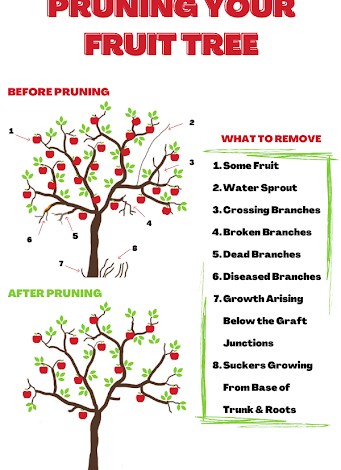
Fruit trees are an excellent addition to any homestead or yard, but you must maintain them if you want more than just leaves and shade. Pruning has an impact on a tree’s fruit production, quality, and longevity. It’s not just about keeping a tree looking good.
The issue is that many people either prune too little, too much, or at the wrong time. This guide will explain when and how to prune your fruit trees to increase your harvest and ensure that they continue to produce year after year.
Timing Is Everything: When to Prune for the Best Results
A tree reacts differently in different seasons. Pruning at the right time can make the difference between a stressed-out tree and a bumper crop.
- Most fruit trees thrive in late winter or early spring: The tree is still dormant just before new growth begins, which promotes robust spring growth and facilitates the healing of wounds.
- Avoid pruning in the fall: The tree may become susceptible to winter damage if fall pruning causes new growth that won’t harden off before frost.
- There’s another reason for summer pruning: It is beneficial when a tree grows too quickly, and if done sparingly, it can enhance the flow of air and light within the canopy.
Know Your Tree Type: Different Trees, Different Rules
Pruning has varying effects on different fruit trees. What is beneficial to one species may be detrimental to another.
- A robust central leader system is advantageous for both apples and pears: To preserve form and structure, stick to a single dominant trunk and cut off rival vertical shoots.
- Peaches and nectarines prefer an open-center shape: In order to receive more sunlight, these trees thrive when their three to five main limbs spread outward like a bowl.
- Cherries and plums are more sensitive to cuts: To lessen the chance of rot or disease seeping into the wounds, make small, well-placed cuts when dry.
Focus on Structure First: Young Trees Set the Tone
The future shape of a tree is set during the first few years after planting. Major corrections later on can be avoided by starting early.
- Start shaping in the first 1–3 years after planting: Early pruning lays a strong foundation for future fruit production, and young trees are simpler to train.
- Regularly remove water sprouts and suckers: Clearing these fast-growing, vertical shoots helps your tree focus its energy on producing fruit, since these shoots rarely bear any.
- Keep branches evenly spaced and well-angled: To support future fruit weight and prevent splitting, strong branches should grow at an angle of 45 to 60 degrees from the trunk.
Maximize Sunlight and Airflow: More Light, Better Fruit
Trees require air to remain healthy, and fruits require sunlight to ripen. Pruning aids in both.
- Don’t just shorten the canopy; thin it: Cutting off entire branches allows more light to reach more areas of the tree and opens it up more than just trimming the tips.
- Make selective cuts to allow light to hit every branch: Make sure there are open spaces where sunlight can enter because branches that are shaded by higher limbs will not bear good fruit.
- Airflow cuts down on fungal diseases: After rain, a canopy with adequate ventilation dries more quickly, reducing the likelihood of rot, mildew, and blight.
Use Proper Technique: Clean Cuts, Right Tools
Careless technique can harm your tree even if you time everything perfectly. It matters how you cut.
- Use sharp, clean pruning tools: Dirty tools can spread disease from one cut to another, and dull blades can crush wood and leave ragged wounds.
- Cut just outside the branch collar: Don’t cut into or leave a long stub at the base of a limb because this swollen area helps the tree naturally seal off wounds.
- Don’t top your tree unless necessary: Removing the main trunk often triggers weak vertical regrowth that needs even more pruning later.
The goal of pruning fruit trees is to maximize fruit production and shape healthy growth, not to make your trees look picture-perfect. Every season will yield better results if you prune according to your tree’s needs, at the appropriate time, and with consideration for it.
Additionally, trees are forgiving, so don’t worry if it’s not flawless. Every year offers an opportunity to grow, learn, and gain more from your orchard.
Read more:HCOOCH CH2 H2O